
Thailand's Dental Tourism Surge: What U.S. Patients Can Expect in 2026
Explore why Thailand is the top dental tourism destination for U.S. patients in 2026.
Written by
Vayby Editorial
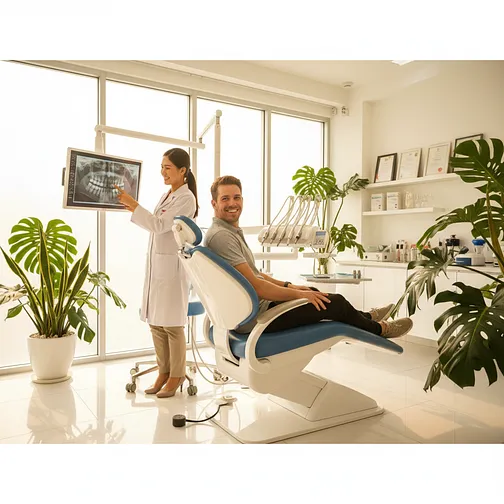
The dental bill arrives, and for a moment, you do a double-take. A single dental implant: $4,500. A full set of veneers: $20,000 or more. Crown work that your insurance barely touches. For millions of Americans, this is not an unusual Tuesday — it is a recurring financial reality that is quietly reshaping how and where people choose to take care of their teeth. Increasingly, the answer involves a passport, a long-haul flight, and a dental chair in Bangkok.
Thailand's dental tourism sector has reached a remarkable milestone heading into 2026, with annual patient volumes approaching 972,000 — and American patients represent one of the fastest-growing segments, with demand surging tenfold in recent years. This is not a fringe trend driven by desperation. It is a calculated, well-researched decision being made by retirees, young professionals, small business owners, and families who have done the math and decided that combining world-class dental care with an extraordinary travel experience simply makes sense. If you are among the growing number of U.S. patients considering dental work in Thailand, here is everything you need to know before you book your flight.
Why Thailand Has Become the World's Dental Capital
Thailand's rise as a global hub for dental care did not happen by accident. Over the past two decades, the country has made deliberate, strategic investments in its healthcare infrastructure, training programs, and international patient services. Bangkok, Chiang Mai, and Phuket are now home to dental clinics that rival — and in many cases surpass — the facilities found in major American cities.
Several factors have converged to make Thailand the destination of choice for international dental patients:
Internationally trained dentists: Many Thai dental professionals have completed advanced training or residencies in the United States, United Kingdom, Australia, or Europe. English fluency is common in Bangkok's top clinics, removing one of the most significant barriers for international patients.
State-of-the-art technology: Leading Thai dental clinics routinely use CAD/CAM technology for same-day crowns, digital smile design software, cone beam CT scanning, and laser dentistry — the same tools you would find in a premium U.S. practice.
JCI and international accreditation: The Joint Commission International (JCI) accreditation, the gold standard for international healthcare quality, has been awarded to several Thai hospitals with dental departments. This matters enormously for patients evaluating safety and standards.
A mature medical tourism ecosystem: Thailand has been welcoming international patients for more than 30 years. The infrastructure — from airport transfers to multilingual patient coordinators to recovery-friendly hotels — is deeply established and continuously refined.
Compared to other popular dental tourism destinations like Mexico (particularly Los Algodones and Tijuana), Hungary (a long-standing favorite for European patients), Costa Rica, Colombia, and Turkey, Thailand offers a unique combination of clinical excellence, affordability, and an unparalleled travel experience that has proven especially compelling for Americans willing to travel farther for greater savings.
The Numbers That Are Driving American Patients East
Let us talk about the financial reality that is fueling this surge. The cost disparity between dental care in the United States and Thailand is, in a word, staggering.
Here is a general comparison of common procedures:
| Procedure | U.S. Average Cost | Thailand Average Cost | Approximate Savings |
|---|---|---|---|
| Single dental implant | $3,500–$5,000 | $800–$1,500 | 65–80% |
| Porcelain crown | $1,200–$1,800 | $250–$500 | 65–75% |
| Full porcelain veneers (per tooth) | $1,500–$2,500 | $300–$600 | 70–80% |
| Full mouth rehabilitation | $30,000–$80,000 | $8,000–$20,000 | 60–75% |
| All-on-4 dental implants (per arch) | $20,000–$30,000 | $5,000–$10,000 | 65–75% |
| Root canal (molar) | $1,200–$1,800 | $200–$400 | 70–80% |
Note: Prices are approximate and vary by clinic, location, and individual case complexity. Always obtain a formal treatment plan and itemized quote.
When you factor in round-trip flights from the U.S. West Coast to Bangkok (typically $600–$1,200 in economy), a week or two of hotel accommodation ($50–$150 per night in comfortable mid-range hotels), and meals, the total trip cost for many patients still represents a savings of $10,000 to $50,000 compared to having the same work done at home. For patients requiring extensive work — full mouth rehabilitation, multiple implants, or a complete smile makeover — the financial case becomes overwhelming.
Beyond the savings, many American patients report that the quality of care they received in Thailand met or exceeded their expectations. This subjective but important factor has contributed significantly to word-of-mouth referrals, which remain one of the most powerful drivers of dental tourism growth.
What to Expect: From Consultation to Recovery
Understanding the practical journey from initial inquiry to returning home with a new smile is essential for anyone considering dental tourism in Thailand. The process is more organized — and more patient-friendly — than many first-timers expect.
Before You Travel
Most reputable Thai dental clinics now offer comprehensive pre-travel consultation services. You can typically send X-rays, photographs, and a description of your dental concerns via email or through a clinic's patient portal. Within a few days, you will receive a detailed treatment plan with itemized costs, a recommended timeline, and answers to your questions. This step is non-negotiable — do not book flights before you have a written treatment plan from a specific dentist.
Many clinics also offer virtual video consultations, allowing you to speak directly with the dentist who will treat you. This builds rapport and allows you to assess communication quality before committing.
Planning Your Timeline
The length of your stay will depend entirely on the complexity of your treatment:
- Simple procedures (cleanings, fillings, a single crown): 3–5 days is typically sufficient
- Veneers or multiple crowns: Plan for 7–10 days to allow for preparation, temporary placement, lab fabrication, and final fitting
- Dental implants: Implants require osseointegration — the process of the implant fusing with the jawbone — which takes 3–6 months. Most patients make two trips: one for implant placement, and a return visit for crown attachment. Some clinics offer "teeth in a day" protocols for appropriate candidates.
- Full mouth rehabilitation: Allow 2–3 weeks for complex cases
During Your Stay
Bangkok's top dental districts — particularly around Sukhumvit, Silom, and the hospital districts — are well-equipped to handle international patients. Clinics typically provide airport pickup services, hotel recommendations near the practice, and dedicated patient coordinators who manage scheduling, translation, and any logistical concerns.
Expect your initial in-person consultation to be thorough. Digital X-rays, 3D scans, and a full clinical examination are standard at quality clinics. Treatment often begins the same day or the following morning.
Recovery and Follow-Up
Thailand's combination of excellent food, warm weather, and world-class hospitality makes it a genuinely pleasant place to recover from dental procedures. Most patients find that mild discomfort after procedures like implant placement or extensive crown preparation is easily managed with prescribed medication and a few days of rest.
Before leaving, ensure you receive:
- A complete set of your dental records, X-rays, and treatment documentation
- A written aftercare plan
- Contact information for your treating dentist for post-return questions
- Warranty documentation for any prosthetic work
Choosing the Right Clinic: Safety, Accreditation, and Red Flags
This is the section that separates informed dental tourists from those who have difficult experiences. The quality of dental clinics in Thailand varies considerably, and the responsibility for due diligence rests with the patient.
Prioritize Accreditation
Look for clinics affiliated with or operating within JCI-accredited hospitals. The Thailand Medical Council and the Dental Association of Thailand also provide frameworks for professional standards. Some clinics have achieved ISO certification or are accredited by regional bodies. Accreditation is not a guarantee of perfection, but it is a meaningful signal of commitment to quality and safety protocols.
Research Your Dentist, Not Just the Clinic
Ask specifically about the qualifications of the dentist who will perform your treatment. Where did they train? Do they have specialist credentials in the area you need (e.g., implantology, prosthodontics, periodontics)? How many procedures of your type have they performed? A polished clinic website is not a substitute for verified clinician credentials.
Use Reputable Facilitators Carefully
Medical tourism facilitators can be helpful for logistics, but be aware that some earn commissions from clinics they refer to. If you use a facilitator, choose one that is transparent about its business model and provides access to multiple clinic options rather than steering you exclusively toward one partner.
Red Flags to Watch For
- Prices that seem dramatically lower than even the Thai average (a sign of corner-cutting)
- Pressure to make quick decisions or pay large deposits before receiving a formal treatment plan
- Inability or unwillingness to provide dentist credentials
- No clear process for handling complications
- Lack of English-speaking staff in a clinic marketing to international patients
Consider Continuity of Care
One of the genuine complexities of dental tourism is what happens if something goes wrong after you return home. Discuss this explicitly with any clinic you consider. Reputable clinics will have a clear protocol for managing complications remotely and will facilitate communication with a dentist in your home country if needed. Some offer partial refunds or free corrective work if you return within a defined period.
Thailand vs. Other Dental Tourism Destinations: How Does It Compare?
For American patients, Thailand is not the only option worth considering. A brief comparison helps contextualize the choice:
Mexico remains the most popular destination for Americans due to geographic proximity — a short drive or flight from border states. Los Algodones, nicknamed "Molar City," and Tijuana offer significant savings and convenience. However, quality varies widely, and the distance advantage diminishes for patients on the East Coast.
Costa Rica and Colombia (particularly Medellín and Bogotá) offer strong quality-to-cost ratios and increasing international accreditation. Travel times from the U.S. are shorter than Thailand, though savings are generally somewhat less dramatic.
Hungary is the dental tourism capital of Europe, drawing patients from across the EU and the UK. Quality is consistently high, but the cost advantage for Americans — after transatlantic flights — is less compelling than Asian alternatives.
Turkey (Istanbul and Antalya) has emerged as a major player, particularly for veneers and smile makeovers, with aggressive pricing and high-volume clinics. Due diligence is especially important here, as the market has attracted both excellent practitioners and less scrupulous operators.
India offers some of the lowest prices globally for dental work, with strong English-language capabilities and internationally trained dentists in major cities like Mumbai, Delhi, and Chennai. It remains underutilized by American patients relative to its quality potential.
South Korea (Seoul) is renowned for cosmetic and reconstructive dental work, with cutting-edge technology and meticulous attention to aesthetics — though prices are higher than Thailand and savings over U.S. costs are more modest.
For patients requiring complex, multi-procedure treatment and who are comfortable with longer travel, Thailand's combination of consistent quality, established infrastructure, and significant cost savings makes it a compelling choice that compares favorably across the board.
Practical Tips for First-Time Dental Tourists to Thailand
Before you finalize your plans, keep these practical considerations close at hand:
Get a dental evaluation at home first: Know exactly what you need before you travel. A U.S. dentist's assessment and X-rays provide a valuable baseline and can be shared with Thai clinics during pre-travel consultation.
Check your travel insurance: Standard travel insurance typically does not cover elective dental procedures abroad. Look for medical tourism-specific policies that cover treatment complications and emergency medical evacuation.
Budget for contingencies: Build a 15–20% financial buffer into your budget for unexpected additional treatment needs identified once you arrive.
Time your trip wisely: Avoid scheduling major dental procedures in the final days of your trip. Give yourself buffer time before flying home, particularly after implant surgery or extensive work.
Flying after dental work: Consult your dentist about flying after specific procedures. Pressure changes can occasionally cause discomfort after certain treatments. Most patients fly comfortably within 24–48 hours of routine crown or veneer work.
Keep records of everything: Maintain a personal file with all treatment records, X-rays, and correspondence. Your U.S. dentist will need these for follow-up care.
Inform your U.S. dentist: Let your home dentist know you are planning dental work abroad. A cooperative relationship between your Thai and American dental providers is in your best interest for long-term oral health.
Learn basic Thai courtesies: A simple sawasdee (hello) and khob khun (thank you) go a long way in Thai culture and will be warmly received by clinic staff.
Conclusion: Making an Informed Decision
The surge in American patients traveling to Thailand for dental care in 2026 reflects something deeper than sticker shock at U.S. dental prices. It reflects a growing sophistication among patients who are willing to research, plan carefully, and take ownership of their healthcare decisions. For many, the experience has been transformative — not only financially, but in terms of the quality of care received and the broader experience of combining treatment with meaningful travel.
Thailand's dental tourism sector has earned its reputation through decades of investment in clinical excellence, international accreditation, and patient-centered service. The nearly one million patients it will welcome this year are not taking a gamble — they are making an informed choice backed by substantial evidence.
Your actionable takeaways:
- Start with research: Identify two or three JCI-accredited or highly reviewed clinics in Bangkok, Chiang Mai, or Phuket and request formal treatment plans
- Verify credentials: Confirm the qualifications of the specific dentist who will treat you
- Get your dental records in order: Obtain current X-rays and a written assessment from your U.S. dentist before traveling
- Plan your timeline carefully: Match your trip length to your treatment complexity
- Secure appropriate insurance: Invest in medical tourism-specific coverage
- Budget holistically: Include flights, accommodation, and contingency funds in your total cost calculation
- Maintain continuity: Ensure you leave Thailand with complete records and a clear aftercare plan
The gap between what dental care costs in the United States and what it costs in Thailand is unlikely to close meaningfully in the near future. For patients facing significant dental needs, the question in 2026 is no longer why would you go to Thailand? — it is increasingly why wouldn't you?
Related Articles

Exploring the Booming Dental Tourism Market: Key Insights for 2031
Discover how dental tourism is reshaping global healthcare and what to consider before traveling for dental treatments in 2031.
Read More
Exploring Dental Tourism: La Clínica Dental in Mexico & Colombia
Discover how La Clínica Dental is transforming dental tourism in Mexico and Colombia, providing quality care at affordable prices.
Read More