
The Rise of Dental Care in Mexico: A Medical Tourist's Guide
Explore why Mexico is a top dental tourism destination in 2026, offering significant savings and rising clinical standards for patients.
Written by
Vayby Editorial
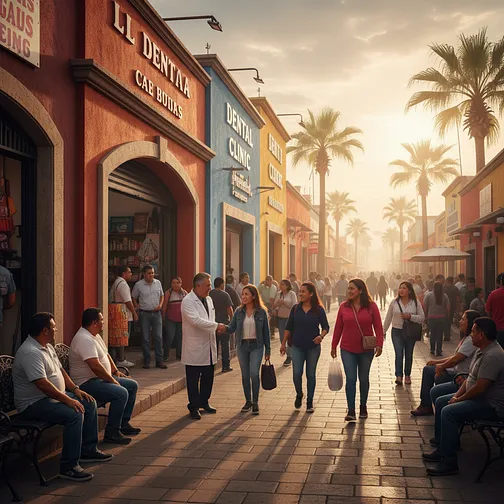
Every year, millions of people sit in a dentist's chair in the United States or Canada, listen to a treatment plan, and then quietly do the math. A single dental implant can cost $3,000 to $6,000 in the US. A full set of veneers? Easily $15,000 to $30,000. For many patients, the numbers simply don't add up — and increasingly, they're finding that a short flight south of the border does.
Mexico has quietly become one of the world's most significant dental tourism destinations, and in 2026, that trend isn't just continuing — it's accelerating. Fueled by a combination of dramatic cost savings, improving clinical standards, digital healthcare infrastructure, and sheer geographic convenience for North American patients, Mexico's dental sector is experiencing a boom that is reshaping how millions of people think about oral healthcare. This guide is designed to help you understand what's driving this shift, what to realistically expect, and how to navigate the journey safely and confidently.
Why Mexico? Understanding the Dental Tourism Surge
Mexico's rise as a dental tourism powerhouse didn't happen overnight. It has been building for decades, but several converging factors have pushed it firmly into the mainstream in 2026.
Geography is the obvious starting point. For patients in the American Southwest, Texas, or California, cities like Los Algodones, Tijuana, and Juárez are literally a short drive across the border. Unlike traveling to other well-regarded dental tourism destinations — say, Hungary in Central Europe, Thailand in Southeast Asia, or Colombia in South America — Mexico requires no transatlantic or transpacific flight. Many patients drive to their appointments in the morning and return home the same evening.
Cost savings are the central draw. On average, dental procedures in Mexico cost between 50% and 75% less than equivalent treatments in the United States or Canada. A dental implant that costs $4,500 in Los Angeles might run $900 to $1,500 in Tijuana or Los Algodones. Porcelain veneers priced at $2,000 per tooth in New York can be found for $350 to $500 per tooth in Mexican border cities and resort destinations. Full-mouth reconstructions that would bankrupt many American families become genuinely accessible options.
The digitization of healthcare has also played a major role. Mexican dental clinics — particularly those catering to international patients — have invested heavily in digital record systems, online consultation platforms, and teledentistry tools. Patients can now share X-rays, receive treatment plans, and get cost estimates before ever leaving home. This transparency has significantly reduced the uncertainty that once made medical travel feel risky.
Rising clinical standards have helped build trust. Many of Mexico's top dental clinics now employ dentists who trained in the United States, Canada, or Europe, and a growing number of facilities hold international accreditations or affiliations with recognized dental associations. The combination of competitive pricing and credible quality has proven to be a powerful draw.
Key Destinations: Where Patients Are Going and Why
Mexico is a large and diverse country, and not all dental tourism destinations are created equal. Understanding the differences between major hubs can help you choose the right location for your needs.
Los Algodones, Baja California — often nicknamed "Molar City" — is arguably the most concentrated dental tourism zone in the world. A small town of just a few thousand permanent residents, it hosts hundreds of dental clinics packed into a few square blocks just across the US border from Yuma, Arizona. The town is almost entirely oriented around international dental patients, which means the infrastructure — from English-speaking staff to patient transportation — is exceptionally well developed. Los Algodones tends to attract patients seeking straightforward, high-volume procedures: cleanings, fillings, crowns, and dentures.
Tijuana offers a more urban experience and a broader range of specialties. Its proximity to San Diego has made it a natural destination for Californians, and the city hosts some of Mexico's most sophisticated dental clinics, including multi-specialty practices capable of handling complex implant cases, full-mouth rehabilitations, and cosmetic transformations. Tijuana has also become a hub for all-on-4 and all-on-6 implant procedures, which can cost $10,000 to $15,000 there compared to $25,000 to $40,000 in the United States.
Cancún and the Riviera Maya have emerged as a compelling option for patients who want to combine dental care with a vacation. The quality of care in Cancún's top clinics is comparable to Tijuana, and the resort environment makes the experience of recovery considerably more pleasant. Patients from the US East Coast and Midwest often find that flying to Cancún is more practical than driving to the border, and the ability to recuperate on a Caribbean beach while waiting for permanent restorations to be fitted has obvious appeal.
Guadalajara and Mexico City are increasingly on the radar for patients seeking highly specialized care. These major metropolitan centers have university-affiliated dental schools and private clinics with specialists in periodontics, orthodontics, and maxillofacial surgery. While they require more travel, they offer access to a depth of expertise that smaller border towns cannot match.
What Procedures Are Most Popular — and What Are the Real Savings?
Understanding which procedures deliver the best value in Mexico helps patients set realistic expectations and plan their trips effectively.
Dental implants remain the flagship procedure driving dental tourism. The all-in cost — including the implant post, abutment, and crown — typically ranges from $900 to $1,800 per implant in Mexico, compared to $3,000 to $6,000 in the United States. For patients needing multiple implants or full-arch restorations, the savings can easily exceed $20,000 on a single treatment plan.
Porcelain veneers and smile makeovers are the second major category. Mexico's cosmetic dental clinics have invested in CAD/CAM technology and digital smile design software, allowing patients to preview their results before treatment begins. The quality of materials — including E.max and zirconia — is comparable to what's used in US clinics, often sourced from the same international suppliers.
All-on-4 and All-on-6 implant-supported dentures represent perhaps the most dramatic value proposition. These procedures, which replace an entire arch of teeth with a fixed prosthetic supported by four or six implants, can cost $8,000 to $15,000 per arch in Mexico. In the United States, the same procedure routinely costs $20,000 to $35,000 per arch.
Crowns and bridges are among the most commonly sought procedures in border towns. Porcelain-fused-to-metal or all-ceramic crowns that cost $1,200 to $1,800 each in the US can be obtained for $200 to $450 in Mexico.
Orthodontics, including traditional braces and clear aligners, are also significantly cheaper. Clear aligner treatment comparable to Invisalign can cost $1,500 to $3,000 in Mexico versus $4,000 to $8,000 in the United States.
It's worth noting that the savings are real, but they are not uniform across all clinics. Price shopping without considering quality credentials can lead to poor outcomes. The lowest price is not always the best value.
Safety, Accreditation, and Choosing the Right Clinic
This is the section that matters most. The cost savings of dental tourism are only meaningful if the care you receive is safe, effective, and durable. Here is how to approach the vetting process seriously.
Look for internationally recognized accreditation. The Joint Commission International (JCI) is the gold standard for hospital and clinic accreditation globally. While not all dental clinics will hold JCI accreditation (it is more common in larger hospital settings), some of Mexico's top facilities do. Additionally, look for clinics whose dentists hold memberships in recognized professional bodies such as the American Dental Association (ADA), the Mexican Dental Association, or the International Congress of Oral Implantologists (ICOI).
Verify credentials individually. Ask for the dentist's educational background, training history, and any specialty certifications. Many of Mexico's top dental professionals completed postgraduate training in the United States, Spain, or other countries with rigorous dental education systems. Don't be shy about asking — reputable clinics will provide this information readily.
Request before-and-after portfolios. Established cosmetic dental clinics should be able to show you documented cases of previous patients, particularly for complex procedures like full-mouth reconstructions or smile makeovers.
Read verified patient reviews. Platforms that aggregate verified reviews from actual patients — rather than clinic-managed testimonials — are valuable. Look for patterns across multiple reviews, particularly regarding communication, follow-up care, and how complications were handled.
Understand the follow-up plan. One of the legitimate challenges of dental tourism is managing aftercare when you return home. Before committing to treatment, establish a clear plan: Who will you see if you experience complications? Does the Mexican clinic offer any guarantee or warranty on their work? Some clinics offer warranties of one to five years on implants and restorations, which is a meaningful commitment.
Consider a consultation trip first. For major procedures, it's worth making an initial visit for consultation, X-rays, and treatment planning before committing to the full procedure. This allows you to assess the clinic's environment, meet the dental team, and establish trust before the most significant work begins.
Practical Tips for Planning Your Dental Trip to Mexico
The logistics of dental tourism require thoughtful planning. Here are the key practical considerations for a successful experience.
Time your trip realistically. Complex procedures like implants or full-mouth reconstructions require multiple visits over days or weeks. All-on-4 procedures often involve an initial surgery followed by a healing period and a return visit for permanent prosthetics. Plan your trip around the clinical timeline, not just your vacation schedule.
Budget for the full trip cost. When calculating savings, include flights or driving costs, accommodation, meals, and any incidentals. Even with these additions, the savings compared to US pricing are typically substantial — but it's important to have an accurate picture.
Arrange accommodation near the clinic. Many dental clinics in popular tourist destinations have partnerships with nearby hotels or can recommend patient-friendly accommodation. Staying close to the clinic reduces stress, particularly after procedures that involve soreness or swelling.
Bring complete dental records. Your current X-rays, treatment history, and any relevant medical records (particularly if you take medications that affect dental treatment, such as blood thinners or bisphosphonates) should be shared with your Mexican dental team in advance.
Use teledentistry for pre-trip planning. Most reputable international dental clinics now offer virtual consultations. Use these to discuss your treatment plan, understand the timeline, get a detailed cost estimate, and ask every question you have before committing to travel.
Secure travel insurance that covers medical complications. Standard travel insurance may not cover complications arising from elective dental procedures. Look specifically for policies that include medical evacuation and treatment for complications related to planned procedures abroad.
Inform your home dentist. Maintaining a relationship with a dentist in your home country is important for ongoing care and for managing any complications that arise after your return. Some home dentists are reluctant to treat complications from work done abroad, so have this conversation in advance.
Mexico in the Global Context: How Does It Compare?
Mexico is not the only destination competing for international dental patients, and understanding how it fits into the global landscape helps patients make informed comparisons.
Hungary has long been considered the dental capital of Europe, drawing patients from the UK, Germany, and Scandinavia with costs roughly 50-60% lower than Western European prices and a strong tradition of dental education. For European patients, Hungary remains a top choice, but for North Americans, the transatlantic journey makes Mexico far more practical.
Thailand and India offer comparable or even lower prices than Mexico for many procedures and have excellent accredited facilities, but the travel distance from North America is a significant deterrent for routine dental work.
Costa Rica and Colombia are strong regional competitors that offer quality dental care at prices similar to Mexico, with the added appeal of beautiful natural environments. Colombia in particular has seen rapid growth in its medical tourism sector, with cities like Medellín and Bogotá developing strong reputations for cosmetic dentistry.
Turkey has emerged as a major dental tourism destination for European patients, particularly for veneers and smile makeovers, with Istanbul becoming known for high-volume cosmetic dental practices.
What sets Mexico apart for North American patients is the combination of proximity, price, and the now-mature infrastructure of patient services that has developed in border cities and resort destinations over decades. It is a market that has had time to specialize and refine its offering for international patients in a way that is difficult to replicate.
Conclusion: Making an Informed Decision
Mexico's dental tourism sector in 2026 represents a genuine opportunity for patients who approach it with the right preparation and realistic expectations. The cost savings are real and substantial. The quality of care at reputable clinics is high. The infrastructure for international patients — from digital consultations to English-speaking staff — has never been more developed.
Here are the actionable takeaways for anyone considering dental care in Mexico:
- Do your research before price shopping. Identify accredited, well-reviewed clinics before comparing costs. Quality should be the filter, not price alone.
- Use virtual consultations to vet your clinic and dentist before committing to travel. This step is non-negotiable for major procedures.
- Plan your timeline around the clinical requirements, not your vacation schedule. Complex work takes time.
- Budget for the complete trip cost, including travel, accommodation, and a contingency for follow-up.
- Maintain your relationship with a home dentist for ongoing care and complication management.
- Secure appropriate travel insurance that covers medical complications from planned procedures.
- Ask about warranties and aftercare from any clinic you consider for major restorative work.
Dental care in Mexico is not a shortcut or a compromise for those who can't afford "real" care. For millions of patients, it is simply a smarter way to access high-quality treatment at a price that makes sense. The key is approaching it with the same diligence you would bring to any significant healthcare decision — because that's exactly what it is.
Related Articles
Orthopedic Surgery Costs in India: A 2026 Guide
Explore orthopedic surgery costs in India and how they compare globally. Save on your medical trip with our comprehensive guide.
Read More
Understanding the Financial Risks of Medical Tourism Complications
Learn how complications from medical tourism can impact your finances and what to consider before traveling for treatments.
Read More