
Turkey's Hair Transplant Tourism: What You Need to Know
Explore Turkey's rise as the top destination for hair transplants and essential insights for prospective patients before booking their trip.
Written by
Vayby Editorial
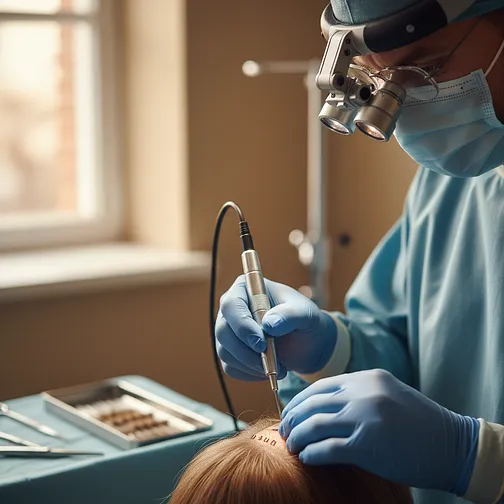
Every year, hundreds of thousands of people board planes not for a beach holiday or a business trip, but to reclaim something deeply personal: their hair. Turkey has quietly — and then very loudly — become the world's undisputed capital of hair transplant surgery, attracting patients from the United Kingdom, Germany, the United States, the Gulf states, and beyond. The country now generates an estimated $2 billion annually from hair transplant tourism alone, a figure that would have seemed extraordinary just a decade ago. But behind the glossy before-and-after photos and the all-inclusive package deals lies a more complex picture — one that every prospective patient deserves to understand before booking their flight.
Why Turkey Became the World's Hair Transplant Hub
The story of Turkey's dominance in hair restoration is not accidental. It is the product of deliberate policy, geographic advantage, and market timing.
Istanbul, in particular, sits at the crossroads of Europe and Asia, making it accessible to patients from dozens of countries with relatively short flight times. Turkey's government recognised medical tourism as a strategic economic sector in the early 2000s and began investing in healthcare infrastructure, English-speaking medical staff, and international accreditation pathways. Today, Istanbul alone is home to an estimated 350 to 500 hair transplant clinics, ranging from internationally accredited hospitals to small private practices operating out of converted apartments.
The economics are compelling on every side. Turkey's lower cost of living means that labour, facilities, and overhead are significantly cheaper than in Western Europe or North America — and those savings are passed on to patients. At the same time, Turkish surgeons began accumulating extraordinary volume experience. A surgeon performing five or more procedures daily for several years develops a level of technical proficiency that is genuinely difficult to match in markets where hair transplants are a niche offering.
The result is a self-reinforcing cycle: more patients bring more revenue, which funds better equipment and training, which attracts more patients. Word of mouth — and social media — did the rest.
The Cost Comparison: What Are Patients Actually Saving?
Cost is, honestly, the primary driver for most medical tourists, and the numbers are striking enough to deserve careful examination.
In the United Kingdom, a hair transplant using the FUE (Follicular Unit Extraction) technique typically costs between £5,000 and £15,000, depending on the number of grafts required and the clinic's reputation. In the United States, prices range from $8,000 to $20,000 or more. Germany and other Western European countries sit in a similar range.
In Turkey, the same procedure — often including airport transfers, hotel accommodation, post-operative medication, and follow-up consultations — is typically priced between $1,500 and $4,000. Even accounting for flights and additional travel expenses, most patients save between 60% and 80% compared to having the procedure at home.
For context, other medical tourism destinations also offer hair transplants at reduced costs. India and Thailand are competitive, with prices typically ranging from $1,000 to $3,500, though Turkey's specialisation gives it an edge in terms of surgeon experience and dedicated infrastructure. Hungary has emerged as a European alternative, particularly for patients who prefer to stay within the EU, with prices around €2,500 to €5,000. Spain offers procedures in the €3,000 to €8,000 range, bridging the gap between full-price Western clinics and budget destinations.
What Turkey offers, uniquely, is the combination of low cost, high volume, and a deeply developed ecosystem specifically built around hair restoration. The country is not a generalist medical tourism destination that happens to offer hair transplants — it has built an entire industry around this single specialty.
Understanding the Procedures: FUE, DHI, and What Clinics Are Selling
Before evaluating any clinic or package, patients need to understand what they are actually buying. The terminology in hair transplant marketing can be confusing, and some clinics use technical-sounding names to justify premium pricing or to obscure what is essentially the same underlying technique.
Follicular Unit Extraction (FUE) is the current gold standard for most patients. Individual hair follicles are extracted from a donor area — typically the back and sides of the scalp — and implanted into the thinning or bald areas. It leaves no linear scar, has a relatively short recovery period, and produces natural-looking results when performed correctly. This is the technique used in the vast majority of Turkish clinics.
Direct Hair Implantation (DHI) is a variation of FUE that uses a specialised implantation pen (the Choi pen) to place grafts directly without pre-made incisions. Proponents argue it offers greater precision and potentially better graft survival rates. Critics note that outcomes depend heavily on the skill of the operator and that the differences in results between FUE and DHI, in experienced hands, are marginal. Many Turkish clinics market DHI as a premium upgrade, often at a higher price point.
Sapphire FUE refers to the use of sapphire-tipped blades rather than steel for creating the recipient sites. Some evidence suggests this may reduce tissue trauma and improve healing, though the clinical significance remains debated.
What patients should be most alert to is the distinction between surgeon-led procedures and those performed primarily by technicians. In high-volume Turkish clinics, it is common for a surgeon to design the hairline and oversee the procedure while trained technicians perform the extraction and implantation. This is not inherently unsafe — experienced technicians can be highly skilled — but patients deserve to know exactly who will be performing each stage of their surgery and what their qualifications are.
The Safety Landscape: Risks, Red Flags, and Accreditation
Turkey's hair transplant industry has a genuine quality problem, and it is important to name it clearly. Alongside excellent, internationally recognised clinics, there exists a significant number of operators offering dangerously cheap packages staffed by inadequately trained personnel.
Reports of complications — including infections, scarring, poor graft survival, unnatural hairline design, and in rare cases more serious medical complications — have been documented by patient advocacy groups and the media. The UK's National Health Service and several European health authorities have issued advisories cautioning patients to research thoroughly before travelling for cosmetic procedures.
Key safety considerations include:
Accreditation: Look for clinics accredited by the Joint Commission International (JCI), the international equivalent of major national healthcare accreditation bodies. JCI accreditation requires clinics to meet rigorous standards for patient safety, staff qualifications, and clinical outcomes. Turkey has a number of JCI-accredited hospitals, though not all hair transplant clinics operate within hospital settings.
Surgeon credentials: Verify that a qualified, licensed plastic surgeon or dermatologist will be involved in your procedure. Ask specifically whether the surgeon will be present for the entire operation or only for the hairline design phase.
Before-and-after portfolios: Request to see documented results from previous patients, ideally with follow-up photos taken 12 to 18 months post-procedure, when final results are visible.
Communication transparency: Be cautious of clinics that are evasive about who will perform your surgery, what the exact procedure involves, or what the complication management protocol is.
Aftercare provisions: Hair transplants require careful post-operative management. Understand what follow-up is included in your package and how complications will be handled if you are back in your home country.
The Turkish Ministry of Health has introduced regulations requiring hair transplant procedures to be performed in licensed medical facilities under physician supervision, though enforcement has been uneven. Patients should not assume that a clinic operating in Turkey automatically meets these standards.
Practical Tips for Patients Considering Turkey for Hair Restoration
If you are seriously considering travelling to Turkey — or any destination — for a hair transplant, the following guidance can significantly improve both your safety and your outcomes.
Research before you book:
- Use independent review platforms, patient forums (such as Hair Restoration Network), and social media groups where patients share unfiltered experiences.
- Cross-reference clinic claims with independent sources. A clinic that appears prominently in paid advertising may not be the most reputable option.
- Seek consultations with at least two or three clinics before committing, and be wary of high-pressure sales tactics.
Plan your timeline carefully:
- Most hair transplant surgeons recommend spending a minimum of 3 to 5 days in Turkey: one day for pre-operative consultation, one or two days for the procedure (large sessions may be split across two days), and one to two days of initial recovery before flying.
- Avoid strenuous activity, sun exposure, and alcohol for several weeks post-procedure.
- Understand that visible results take time — most patients see significant growth between 6 and 12 months after surgery.
Get everything in writing:
- Ensure your contract specifies the number of grafts, the technique to be used, who will perform the procedure, what is included in the package, and what the policy is for revision procedures if results are unsatisfactory.
Consider your overall health:
- Hair transplant surgery, while generally low-risk, is still a medical procedure. Disclose all medications, supplements, and medical conditions to your surgeon. Certain medications (including blood thinners and some antidepressants) can affect candidacy and outcomes.
Budget realistically:
- Factor in flights, accommodation (even if partially covered by the clinic package), travel insurance, post-operative medications, and potential follow-up costs back home.
- Consider purchasing medical travel insurance that specifically covers complications arising from cosmetic procedures abroad — standard travel insurance policies frequently exclude this.
Choose Istanbul strategically:
- The majority of reputable hair transplant clinics are concentrated in Istanbul's Şişli and Nişantaşı districts, which have become the de facto medical tourism corridors of the city. Clinics here tend to have more experience with international patients and better English-language support.
What Results Can Patients Realistically Expect?
Managing expectations is perhaps the most underserved aspect of hair transplant consultations, particularly in high-volume commercial settings where there is an incentive to oversell outcomes.
Hair transplant surgery redistributes existing hair — it does not create new hair. The density achievable is limited by the quality and quantity of the patient's donor area. Patients with extensive baldness and limited donor hair may not be candidates for the dramatic transformations they see in marketing materials. Honest surgeons will assess donor density carefully and provide realistic projections.
Factors that influence outcomes include:
- Age and stage of hair loss: Younger patients with progressive hair loss may require multiple procedures over time as loss continues.
- Hair characteristics: Coarser, curlier hair tends to provide better visual coverage per graft than fine, straight hair.
- Surgeon skill and graft handling: Graft survival is critically dependent on how carefully follicles are handled during extraction and implantation. Dehydration or mechanical damage during this process can significantly reduce the number of viable grafts.
- Post-operative care compliance: Following aftercare instructions — gentle washing, avoiding trauma to the scalp, taking prescribed medications — meaningfully affects final outcomes.
The best clinics in Turkey offer thorough pre-operative assessments, honest counselling about expected results, and structured follow-up protocols. These are the clinics worth seeking out, even if they charge somewhat more than the market minimum.
Conclusion: Making an Informed Decision
Turkey's hair transplant industry is a genuine phenomenon — a sector that has delivered life-changing results for hundreds of thousands of patients while demonstrating that high-quality medical care can be delivered at a fraction of Western prices. The $2 billion figure is not just a statistic; it represents real people who made a practical, often emotionally significant decision to seek treatment abroad.
But the same market forces that created this success story have also created conditions where corners are cut, credentials are inflated, and vulnerable patients can end up with results worse than what they started with.
Here are the actionable takeaways every prospective patient should carry:
- Research independently and thoroughly — do not rely solely on the clinic's own marketing materials.
- Verify accreditation and surgeon credentials before committing to any clinic.
- Get a detailed written contract specifying every aspect of your procedure and package.
- Plan adequate time for consultation, procedure, and initial recovery before travelling home.
- Purchase medical travel insurance that covers cosmetic procedure complications.
- Set realistic expectations based on your individual hair loss pattern and donor characteristics.
- Consider the total cost, including travel, insurance, and potential revision procedures.
Turkey remains one of the world's most compelling destinations for hair restoration, and for many patients, it will be exactly the right choice. The key is approaching the decision with the same care and diligence you would bring to any significant medical procedure — because that is precisely what it is.
Vayby connects international patients with verified, accredited clinics worldwide. Before making any medical travel decision, consult with a qualified healthcare provider in your home country and use our platform to compare clinics, credentials, and patient reviews.
Related Articles
Understanding the Risks of Cheaper Cosmetic Surgery Abroad
Explore the real dangers of cheaper cosmetic surgery abroad and learn how to make informed health decisions.
Read More
The Dangers of Cosmetic Surgery Abroad: What You Must Know
Learn about the risks of cosmetic surgery abroad and how to avoid devastating consequences before making a decision.
Read More